

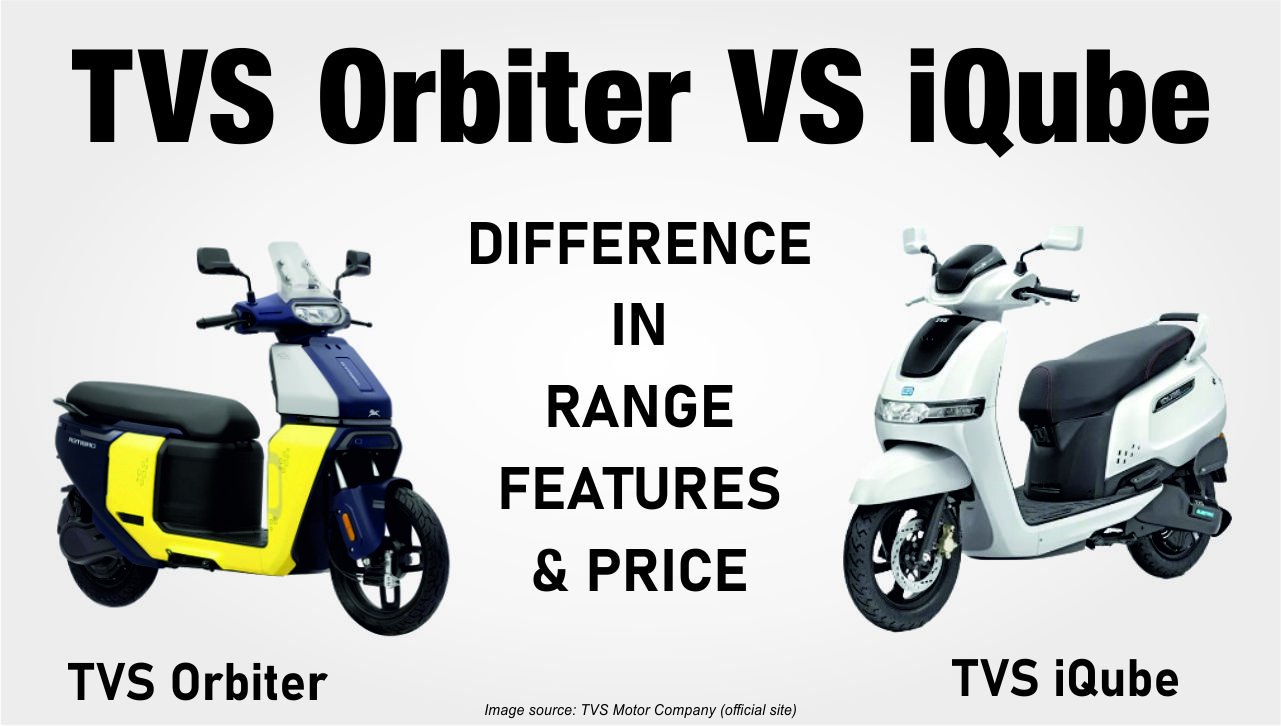
| TVS Orbiter vs iQube Straightforward Comparison of Range, Features & Price” |
Introduction–
The electric scooter market in India is expanding rapidly, and buyers now have multiple options to choose from. Among the latest launches, TVS Orbiter vs iQube has become one of the most searched comparisons for urban commuters.
While the newly launched TVS Orbiter is designed as a practical, affordable, and feature-packed option, the iQube has already established itself as a premium and powerful EV in the market. Both scooters aim to offer reliable performance, modern features, and strong battery ranges, but they target slightly different types of riders.
Let’s explore their design, range, features, and price differences.
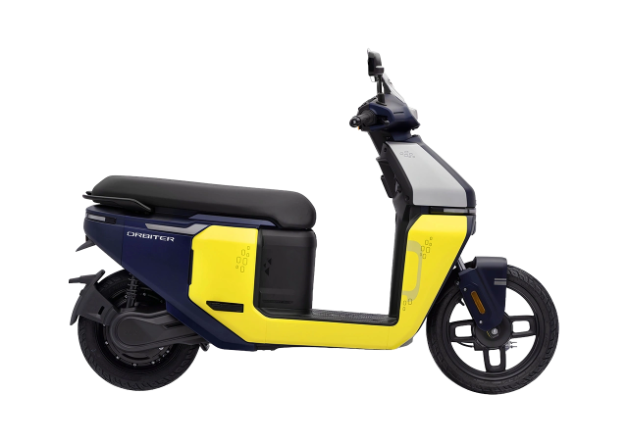
The TVS Orbiter is the latest entry-level electric scooter from TVS, designed for urban commuters who value practicality and efficiency. With a 3.1 kWh battery, it delivers a certified range of up to 158 km on a single charge, making it one of the most reliable options in its segment. The scooter comes equipped with modern features such as cruise control, hill-hold assist, reverse mode, and a 34-litre under-seat storage space. Its minimalistic design, flat seat, and lightweight build ensure comfort for both rider and pillion. The Orbiter is a smart, affordable EV choice for daily city rides.
The TVS iQube is a premium electric scooter that combines performance with smart technology. Available in multiple battery options ranging from 2.2 kWh to 5.3 kWh, it offers a certified range of 94 km to 212 km, catering to different commuting needs. With a top speed of around 78 km/h and peak power of 4.4 kW, the iQube ensures a smooth and powerful ride. It also features a smart Bluetooth cluster, navigation support, telematics, and remote diagnostics. Designed with comfort and reliability in mind, the iQube is ideal for riders seeking a modern, feature-rich EV experience.
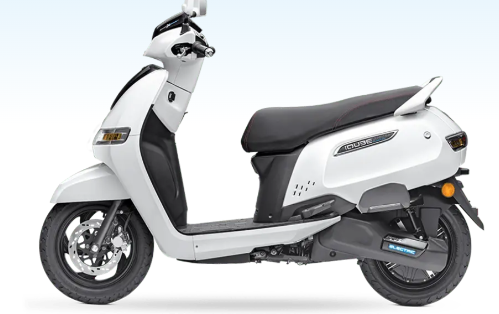
TVS Orbiter vs iQube: Design & Comfort
| Feature | TVS Orbiter | TVS iQube |
|---|---|---|
| Overall Look | Minimalistic, modern lines with flat seat and neat panels | Premium, bold styling with a more robust build |
| Seat Comfort | Flat seat design (good for both rider & pillion) | Slightly contoured seat, better cushioning |
| Storage | 34-litre under-seat boot space (larger capacity) | 32-litre under-seat storage |
| Practicality | Straight footboard and easy handling for city rides | More premium feel, slightly heavier for urban traffic |
TVS Orbiter vs iQube: Battery Range Comparison
| Specification | TVS Orbiter | TVS iQube |
|---|---|---|
| Battery Capacity | 3.1 kWh (single option) | Multiple options – 2.2, 3.1, 3.5 & 5.3 kWh |
| Claimed Range | 158 km (IDC) | 94 km to 212 km (variant dependent) |
| Top Speed | ~68 km/h | ~78 km/h |
| Charging | ~5 hours (standard charger) | Varies by variant, fast-charging available in some models |
| Target User | Entry-level, budget-focused riders | Flexibility seekers, families & premium buyers |
TVS Orbiter vs iQube: Performance & Features
| Specification / Feature | TVS Orbiter | TVS iQube |
|---|---|---|
| Motor Power | ~3 kW (continuous) | Up to 4.4 kW peak power |
| Torque | 110 Nm approx | 140 Nm approx |
| Top Speed | ~68 km/h | ~78 km/h |
| Acceleration (0–40 km/h) | ~4.5 sec | ~4.2 sec |
| Braking | Front disc + rear drum | Front disc + rear drum (CBS) |
| Ride Comfort | Telescopic front fork, mono-shock rear | Telescopic front fork, twin-shock rear |
| Smart Features | Cruise control, hill-hold assist, reverse mode, Bluetooth cluster, navigation, OTA updates | Bluetooth smart cluster, navigation, telematics, remote diagnostics |
| Lighting | LED DRL + headlamps | Full-LED lighting system |
| Other Highlights | Larger boot (34L), USB charging | Multiple battery choices, stronger ride dynamics |
TVS Orbiter vs iQube: Conclusion
Choosing between the TVS Orbiter vs iQube depends on what kind of rider you are. The Orbiter is built for daily city commuters who want affordability, a longer range, and practical features like cruise control, hill-hold assist, and extra storage.
On the other hand, the iQube stands out as a more premium option with stronger performance, multiple battery variants, and advanced ride quality. Both scooters deliver modern tech and reliable EV performance, but the Orbiter focuses on efficiency and value, while the iQube caters to riders seeking more power and flexibility. In the end, the best choice depends on your budget and riding needs.
TVS Orbiter vs iQube: Final Verdict-
If you want an affordable, practical, and feature-rich scooter with excellent range, the TVS Orbiter is the better choice. It’s perfect for daily commuting and budget-conscious riders. However, if you prefer higher performance, premium build quality, and multiple battery options for flexibility, the TVS iQube stands out as the stronger contender.
👉 In short: Orbiter is best for value & range, while iQube is best for performance & premium feel.




Leave a Comment